Sunday, July 5, 2015

July 5th: Stephanie Azzarello, Amelia DeLise, and Gavin McIntyre

In our reading of Broca’s 1861 Remarks on the Seat of the Faculty of Articulated Speech, we were given a firsthand account of how Pierre Paul Broca came to discover the area of the brain now known as Broca’s area. 


While working at the Bicetre Hospital/Hospice, Broca came into contact with a patient known at the time as “Tan” because for the past 21 years of his life the only word he could articulate was “tan”.  Broca learned that when Tan had been admitted to the hospital 21 years earlier, he was only suffering from what come to be called Broca’s aphasia, an inability to produce speech.  During the most recent 10 years of his hospitalization, Tan also began to suffer from paralysis in his right arm, followed by paralysis in his right leg, and vision loss in his left eye.  After meeting the patient, Broca concluded that the problem must lie within the left hemisphere of the brain, since function of the arms and legs was known to be contralateral.  Upon Tan’s death, Broca performed an autopsy on Tan’s brain and found extensive damage to the left hemisphere, which included a large hole in the frontal lobe at the third frontal convolution.  He concluded that this area of the brain must be responsible for speech and that Tan’s aphasia resulted from this damage.

Not long after Broca’s discovery, a German neurologist named Carl Wernicke found another area of the brain involved in language processing. In 1874 Broca initially believed that he had discovered the area responsible for all speech related processes, however with Wernicke’s discovery it became clear this is not the case.  Whereas Broca’s area is involved with the production of speech and language, Wernicke’s area is involved in the comprehension of speech.  Damage to Wernicke’s Area, which is “located in the posterior third of the upper temporal convolution of the left hemisphere of the brain” (encyclopedia Britannica), causes individuals to experience trouble understanding language.  While people may speak fluently and form words correctly, the words are often devoid of meaning or context, creating nonsense phrases, often referred to as "word salad" when attempting to express their thoughts. Other less minor complications include things like generally vague language and the use of superfluous words when trying to express simple ideas.

Photo of Elizabeth Tower and the Palace of Westminster taken from the top of the London Eye


Timeline: 1861-- Paul Broca discovers what we now know as Broca's area.

References:

Benjamin, L. T. (2014). A Brief History of Modern Psychology(2nd ed.). Hoboken, NJ: Wiley.

Broca, P. (1861b). Remarques sur le siége de la faculté du langage articulé, suivies d'une observation d'aphémie (perte de la parole). Bulletin de la Société Anatomique, 6, 330-357. Retrieved from http://psychclassics.yorku.ca/Broca/aphemie-e.htm

Wernicke's Aphasia. (n.d.). Retrieved July 5, 2015, from https://auditoryneuroscience.com/wernicke_aphasia

Wernicke area. (n.d.). Retrieved July 5, 2015, from http://www.britannica.com/science/Wernicke-area

July 5, 2015 Elizabeth and Stephany


1)         A Brief History of Modern Psychology written by Ludy T. Benjamin, Jr discusses sensory physiology that was used to help the earliest psychologist better understand how humans use their senses through gaining knowledge and how the mind incorporates the function of the senses. Multiple questions were raised about senses and how, or if, they differed from person to person and impacted our processing of knowledge. Vision, hearing, taste, smell, and touch were the 5 senses that were the focus of research at this time.
            Advanced knowledge on optical technology allowed more information on color vision to be explored. In 1852 Hermann von Helmholtz was able to expand on a previous theory called Trichromatic Theory, produced by Thomas Young. This theory stated that “three kinds of fibers in the retina that were differentially sensitive to red, green, and blue light” (Benjamin 31). This new theory was only able to explain color blindness and color mixture. This lack of new discovery prompted the necessity of a new proposed theory. Edwald Hering proposed the opponent process theory. Here it was suggested that 3 separate chemicals substances that were located in the retina that were either built up or broken down. This theory was suggested by Hering, stating that there are three color receptors, each taking care of different perception of color (blue-yellow perception, red-green, or black-white). This theory proposed by Hering was able to explain phenomena that were still a mystery in the research of color vision. By the 1960s it was concluded that Young-Helmholtz theory was useful for color vision on a retina level and the opponent process theory was important in knowing “the way color information was processed in the lateral geniculate body of the thalamus, a major relay station from the eye to the visual cortex of the brain”(Benjamin 31). One of the senses Physiologist looked into was vision more specifically color vision. Helmholtz suggested a theory called young-helmholtz theory, or previously known as trichromatic theory. This theory suggested that different fibers are effected differently to different color light, such as red, green, and blue. These two different theories were pinned against each other for multiple years. By the 1960s it was decided that each theory was still important and accurate, but for different characteristics of color vision.  
Young-Helmholtz’s theory answered questions on the retinal level such as how color blindness works and color mixture. On the other hand, Opponent Process Theory answered questions how color was processed. In addition, this theory constituted yellow as a primary color. These two different theories were pinned against each other for multiple years. By the 1960s it was decided that each theory was still important and accurate, but for different characteristics of color vision.  
           

2) Timeline: 1894 was the year that James McKeen Cattell was appointed owner and publisher of the journal Science. Although this was a huge job and extremely time consuming this position offered an amazing opportunity for Cattell to introduce psychology into the science community. Once information pertaining to psychology was available to the scientific community and the educated lay community that were able to read the journal, psychology scientific visibility was granted to this up and coming science that was desperate for establishment before it failed.


4)

July 5, 2015 Sam and Brianna

1.          The contributions that Wilhelm Wundt made to the field of psychology are as important as they are varied.  During the 1860s Wilhelm Wundt worked on establishing psychology as an experimental science by gathering a large array of scientific instruments, creating a journal that he used to publish findings  (Benjamin, 2014), and by founding the first psychology laboratory in Leipzig (Benjamin, 2014). During his earlier years as an assistant to Hermann Helmholtz, he taught a class by the name of “Physiological Psychology” (Benjamin, 2014) as well as publishing what was potentially his most influential piece of literature for Psychology. The book was titled “Principles of Physiological Psychology” which was reprinted for six editions (Benjamin, 2014). Within the book was a compilation of research and information that was taken from various disciplines related to psychology, such as anatomy, neurology, and psychophysics (Benjamin, 2014). As such, this book acted as the first textbook-esque book that was able to describe what psychology was like as an entire field (Benjamin, 2014). Wundt also trained over 180 students at the various professorships that he held over the years (Benjamin, 2014), and contributed many integral ideas to the then fledgling scientific discipline of psychology. Even though Wundt was nominated for a “Noble Prize in Medicine and Physiology” three times, he never ended up winning against the other finalists (Benjamin, 2014).

             Wilhem Wundt studied two psychologies. The first psychology was done in a laboratory involving an experimental process known as voluntarism (Benjamin, 2014). His second psychology was Volkerpsychology, which is also known as cultural psychology. Wundt recognized that there were two aspects of a conscious experience (Benjamin, 2014). One aspect of a conscious experience is the content itself, while the other aspect is apprehension of the conscious experience. Apprehension is the how the experience is interpreted by the individual (Benjamin, 2014). This understanding allowed Wundt to distinguish the differences between psychological research approaches and natural science research approaches. Psychology deals with how the subject’s react to the experiences whereas, natural sciences relates to the entities of the specific experience (Benjamin, 2014). This also explained the differences the domain of psychology known as immediate experience and the domain of natural sciences known as mediate experience (Benjamin, 2014).
             Wundt documented that feelings, sensations, and association make up an experience. One goal of his was that he wanted to discover the fundamental elements that make up a conscious experience (Benjamin, 2014). He also wanted to understand how these elements created physical combinations and compounds (Benjamin, 2014).

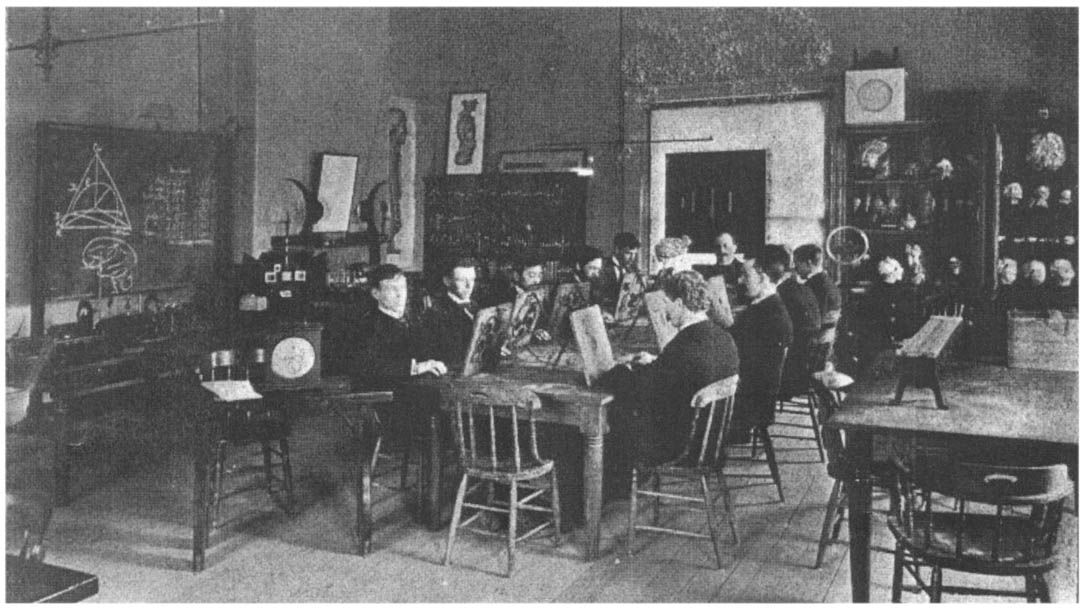
2. This is a link to an image of the first experimental psychology lab in 1879 in University of Leipzig in Germany http://vlp.mpiwg-berlin.mpg.de/vlpimages/images/img26576.jpg

3.  On Saturday July, 5th we visited the Arc De Triomph in Paris, France. This is a photo at the bottom of this monument. After this picture was taken we climbed to the top and to see the view of overlooking Paris.
                                           

4. Web link to the Arc De Triomph
http://www.arcdetriompheparis.com

Works Cited

Benjamin, L. T. (2014). A brief history of modern psychology (2nd ed.). Hoboken, NJ: Wiley.

July 5, 2015: Jenn and Brenden, First London Blog Post

Gustav Fechner (1801-1889) was a German philosopher and physicist who laid the foundation down for psychophysics. He told us that it was possible to measure the relationship between the physical and psychological worlds. By measuring the relationships between the stimuli in the external world (physical events) and the person's perception and experience of those stimuli (psychological events) you will see that they are not the same. The world isn't always as it seems and different individuals may perceive events differently. An example from the book would be going to the movies. Watching a movie will always look extremely real and life-like, but what is actually happening on the screen is just photographs being projected at a very fast pace. This is happening so quickly that psychologically the movements are very real, but physically is that of a succession of discrete images.

This is also relatable to optical illusions. Examples of optical illusions that I have done are the Flash-lag effect, where there are moving and stationary objects that are perceived at different times. I've also done the Motion-bounce illusion, where the sound is influencing the perception of motion. I chose optical illusions as an example because it's an experience of perceiving something which doesn't actually exist or is different than it actually appears to be. For the Flash-lag effect you will see a blue circle in the middle and a blue line connected to it. The blue line will rotate around the circle while a separate blue line is flashing and rotating at the same time. The question is whether or not they are aligned. Most people will psychologically see one of two things, either the flashing line is lagging just behind the line connected to the circle, or you'll see the flashing line at an angle and where they meet there is a kink. However, physically the flashing line and the non-flashing line are in a perfectly straight line. As you can see, optical illusions can have an impact on both the psychological worlds and the physical world.


When reading about Fechner’s psychophysics, specifically the difference threshold, it reminded me of a time in high school when a hypnotist came towards the end of senior year. He called up several seniors and juniors, including me, and had us line up on stage next to each other. We were all instructed to hold out our arms and close our eyes. The hypnotist told us to imagine we had a very heavy weight in our right hand that was 100 pounds or so, and a penny in our left hand. With our eyes shut, our arms started moving up and down… People who had an open imagination started struggling to hold up the heavy weight with their right hand. The hypnotist picked these people to be hypnotized because it’s important to have an open mind to be hypnotized. This reminded me a lot of all of the research done on finding the difference between two stimuli, and even how mentally your perception of a stimulus can change. This reminded me of when Fechner said he finally discovered there is a relationship between the physical and psychological world. Sometimes what we perceive isn’t always reality, and in the hypnotist example some people could actually feel the weights on their hands even though there was nothing there.

Benjamin, JR., L. T. (2014). A Brief History of Modern Psychology. Hoboken, NJ: John Wiley & Sons, Inc.

Travel Link to a restaurant we found that was yummy!: http://www.beckscafe.co.uk/

Below is a picture of a street performer we saw as we walked around London.


Timeline: G. Stanley Hall opened the first psychology laboratory in America in 1883.


July 5, 2015 Olivia and Samantha

(I) In our reading of A Brief History of Modern Psychology, it became apparent just how crucial Hermann von Helmholtz was to the advancement of psychology and science. The work of Helmholtz was invaluable across disciplines and across fields. The author describes his extensive contribution in the field of optics: he invented the ophthalmoscope, as well as the ophthalmometer, that are still used in present day to view the retina and to examine the eye’s curvature, respectively, during eye exams (Benjamin, 2014). Benjamin (2014) notes the other accomplishments of Helmholtz: an improved stopwatch, the Young-Helmholtz theory of color vision, a theory of pitch perception (i.e. resonance or place theory), a contribution to the law of the conservation of energy and to musical theory, “new geometry,” sketches of a telephone (that pre-dated Alexander Graham Bell), etcetera (Benjamin, 2014). The list is exhaustive. It is mind-boggling when one considers how an individual could be responsible for such a vast, cross-disciplinary range of successes.
            Intrigued by the advancements and feats of this one man, we decided to further research Helmholtz’s contributions to modern psychology and other fields. Dependent of the discipline, Helmholtz’s research and studies were founded in empiricism (Williams, 2014). The Britannica Encyclopedia makes an insightful point, regarding his broad contributions: Helmholtz did not wander from field to field – from physiology to psychology to physics. On the contrary, he combined the information and science applied in one field across other disciplines (Williams, 2014). In all work, Helmholtz practiced “a keen philosophical insight, molded by exact physiological investigations… mathematical precision, and sound physical principles” (Williams, 2014). It was with this empirical mind that Helmholtz proved himself to be one of the most accomplished and successful scientists.
            Helmholtz started work on his doctoral thesis in 1842, based on the investigation of animal heat; this exploration led to the discovery of one principle of the conservation of energy in physics (Williams, 2014). This work with animal heat inspired his 1850 research on nerve impulse and conductance. In order to measure nerve transmission, Helmholtz invented the myograph, which he used to calculate the time it took for a nerve impulse to travel from end to end of a severed leg of a frog (Williams, 2014). As evident by the twitching of the severed frog leg, Helmholtz was able to determine that nerve impulses traveled at the speed of 90 ft/s (Benjamin, 2014). This discovery was important to psychology in that it proved that the speed of nerve conductance was a measurable quantity; this discovery helped lay the groundwork for the measurement of other quantities such as reaction time and other mental processes (Benjamin, 2014). It is evident from his contributions, in particular that involving the speed of nerve conductance, that Helmholtz was a scientific visionary.

(II) Fechner Day remembers the day that Gustav Fechner discovered the “psychophysical measurement formula” (Meischner-Metge, 2010). Laying in his bed on October 22, 1850, Fechner writes in his journal and realizes that individuals can tell the different sensations between their psychological and their physical senses (Meischner-Metge, 2010).  This realization leads to years of research that were crucial for the discovery of the absolute and difference thresholds (Benjamin, 2014).

(III) On July 3, 2015 we visited the Dover Castle in Dover, Kent. This is an image from the top of the Great Tower over looking the water.

(IV) Web link to Dover Castle


Works Cited

Benjamin, L. T. (2014). A brief history of modern psychology (2nd ed.). Hoboken, NJ: Wiley.

Meischner-Metge, A. (2010). Gustav Theodor Fechner: Life and work in the mirror of his diary. History Of Psychology, 13(4), 411-423. doi:10.1037/a0021587


Williams, L. (2014, November 5). Hermann von Helmholtz | German scientist and philosopher. Retrieved July 5, 2015, from http://www.britannica.com/biography/Hermann-von-Helmholtz